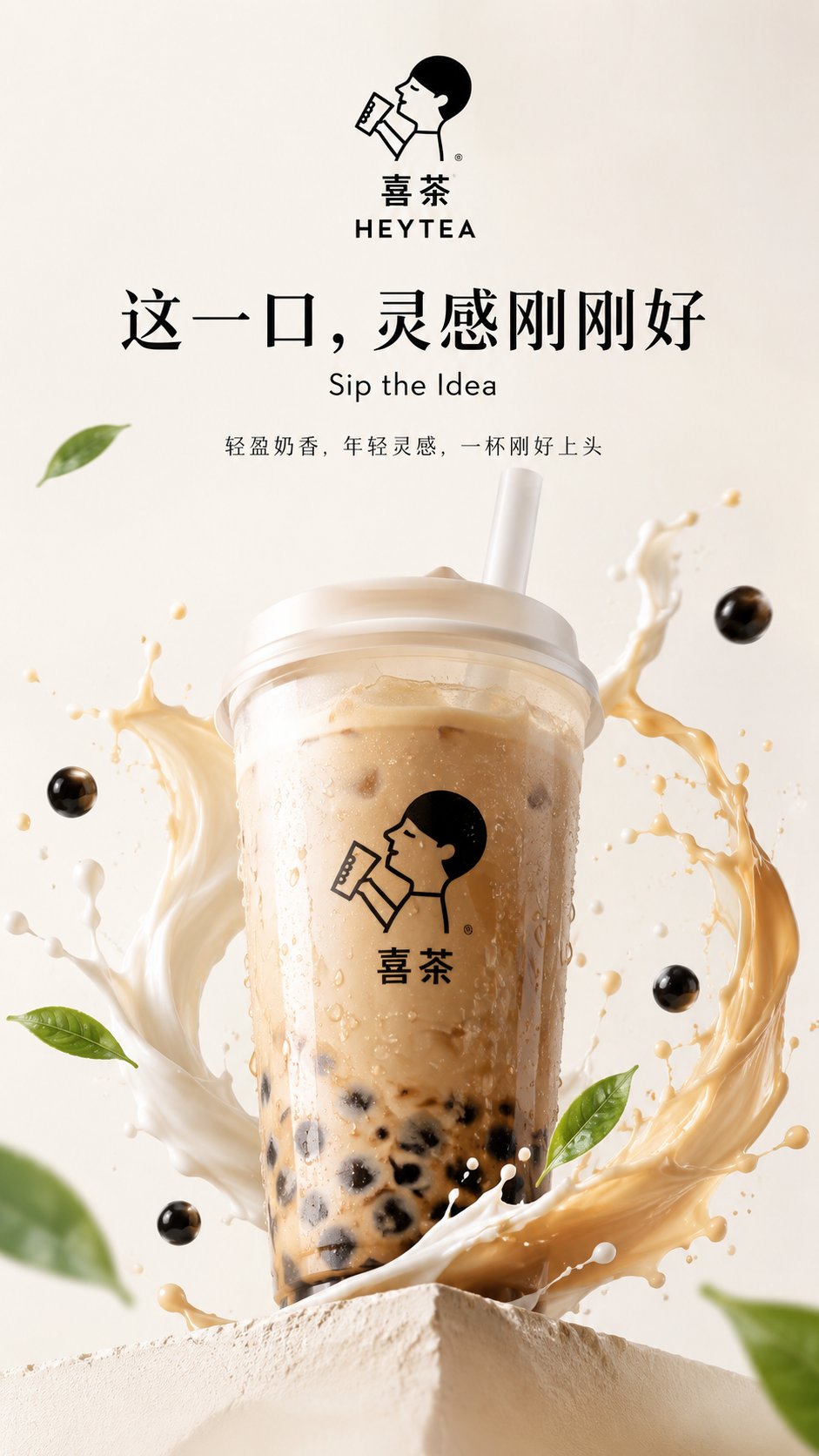
你是一个品牌视觉识别系统、商业广告创意总监、KV海报设计师和高传播品牌视觉生成系统。 请根据用户输入的【现有品牌名称】,自动识别该品牌最具代表性的品牌Logo形象、品牌名称文字识别特征、主推产品、产品包装、品牌色彩、视觉调性、目标人群和广告传播风格,并生成一张符合该品牌气质的概念 KV 海报。 创作定位: - 基于真实品牌认知进行二次创作的品牌概念 KV 海报 - Brand-inspired Concept Key Visual - 用于个人学习、视觉练习与社交平台展示 不需要绝对严苛的一比一官方复刻,但必须做到: 品牌识别度高; 品牌Logo风格明显; 品牌代表产品明显; 品牌调性准确; 整体像该品牌会出现的视觉广告。 ──────────────── 一、用户输入 ──────────────── 品牌名称:{品牌名称} 主推产品:{可选,不填则自动识别该品牌最具代表性的产品} 广告语:{可选,不填则根据品牌调性自动生成原创广告语} 目标人群:{可选,不填则自动判断} 画幅比例:{9:16 / 16:9 / 4:5 / 1:1 / 2.35:1} KV类型:{产品英雄KV / 品牌情绪KV / 强口号传播KV / 人物场景KV / 超现实概念KV / 自动选择} 平台用途:{小红书 / X / 公众号封面 / 视觉练习 / 概念提案} ──────────────── 二、自动识别逻辑 ──────────────── 请根据品牌名称自动完成以下识别,不需要在画面中展示分析过程: 1. 自动识别该品牌所属行业 例如: 科技、运动、美妆、奢侈品、汽车、饮品、咖啡、服饰、潮流、护肤、珠宝、生活方式、数码、家居等。 2. 自动识别该品牌最具代表性的视觉资产 包括: 品牌Logo形象 品牌名称文字风格 主色调与辅助色 最具代表性的产品 包装外观特征 品牌常见广告风格 品牌场景气质 品牌材质感与光影方式 3. 自动识别该品牌的目标人群 例如: 年轻潮流人群、都市白领、精致女性、运动人群、科技用户、高端消费人群、Z世代、商务人群等。 4. 自动识别该品牌的广告语气质 例如: 极简高级、年轻活力、热血冲击、奢华克制、温柔浪漫、科技理性、时尚先锋、生活方式化等。 ──────────────── 三、Logo与产品识别规则 ──────────────── 本次任务允许 AI 根据品牌名称自动识别品牌视觉资产,不需要用户必须上传 Logo 或产品图。 请遵守以下原则: 1. 品牌Logo - 画面中需要有明显的品牌标识 - Logo 或品牌名称文字要具有较高识别度 - 不必追求百分之百精确复刻,但必须让人一眼联想到该品牌 - 不要生成完全陌生、无关、错误感很强的标识 - 不要让品牌名称出现明显错字、乱码或胡乱变形 2. 品牌产品 - 自动选择该品牌最具代表性的主推产品或经典产品作为主视觉 - 产品外观、包装、色彩和气质应接近大众对该品牌的常见认知 - 不需要绝对严格到工业级复刻 - 但要保证“像这个品牌的真实代表产品”,避免完全陌生的产品 3. 品牌包装与材质 - 自动识别该品牌常见包装与材质语言 - 如金属、玻璃、磨砂、塑料、皮革、纸盒、极简包装、奢华包装、运动感材质等 - 产品必须具有真实商业视觉质感 ──────────────── 四、KV创意方向 ──────────────── 请根据品牌属性自动选择最合适的 KV 创意方式。 如果是科技品牌: 使用极简、未来感、真实产品质感、冷静留白、克制光影、干净空间。 如果是运动品牌: 使用速度感、力量感、身体动势、汗水、冲刺、突破、强烈口号感。 如果是美妆品牌: 使用柔光、精致产品、肌肤质感、女性气质、色彩情绪、时尚大片感。 如果是奢侈品牌: 使用高级材质、留白、低饱和色调、秩序构图、稀缺感、时尚大片感。 如果是饮品品牌: 使用冰爽、液体、气泡、年轻感、快乐氛围、色彩冲击、清爽材质。 如果是咖啡品牌: 使用温度、城市生活、松弛氛围、绿色或木质感、晨间陪伴感。 如果是汽车品牌: 使用道路、速度、未来空间、金属质感、城市夜景、驾驶欲望。 如果是潮流品牌: 使用街头、反叛、年轻、图形感、视觉冲击和社交传播感。 ──────────────── 五、广告语规则 ──────────────── 如果用户没有输入广告语,请根据品牌调性自动生成一句原创广告语。 要求: - 广告语不能太长 - 要有品牌感和传播感 - 不使用官方原广告语 - 不需要像正式企业公告 - 更像概念广告的主标语 中文广告语建议: 4到12个字 英文广告语建议: 2到6个单词 广告语风格要与品牌匹配,例如: 科技品牌: 更少干扰,更近未来 运动品牌: 把极限踩在脚下 美妆品牌: 光泽,自成主张 奢侈品牌: 优雅,从不喧哗 饮品品牌: 这一口,刚好上头 咖啡品牌: 唤醒城市的温度 汽车品牌: 驶向更远的秩序 ──────────────── 六、画面结构要求 ──────────────── 整张图必须具备真实品牌 KV 的基本结构: 1. 品牌标识区 品牌Logo或品牌名称需要清晰可见,位置合理。 2. 产品主视觉区 品牌代表产品必须明显,是画面核心之一。 3. 广告语区 广告语清晰可读,具备传播记忆点。 4. 品牌氛围区 背景、光影、材质、空间和色彩必须符合品牌调性。 5. 信息层级区 画面层级建议为: 品牌标识 产品主体 广告语 少量辅助文字 文字不要太多,不要做成密密麻麻的海报。 ──────────────── 七、风格要求 ──────────────── 整体视觉必须具备: 高识别度品牌感 高级商业广告质感 清晰品牌标识 明显品牌产品 强主视觉 强广告语 干净排版 适合社交平台传播 适合小红书和X展示 具有“像某知名品牌概念广告”的完成度 允许适度创意发挥,但品牌核心识别不能丢失。 ──────────────── 八、画幅适配 ──────────────── 如果是 9:16: 适合竖版社交海报,产品更聚焦,广告语放中上区域,适合手机浏览。 如果是 16:9: 适合横版品牌KV、封面、头图,产品与广告语形成左右平衡。 如果是 4:5: 适合社交平台信息流,主体更近,品牌识别更集中。 如果是 2.35:1: 适合公众号封面或宽幅视觉,适合大字广告语和强冲击横版构图。 如果是 1:1: 适合方形封面与品牌视觉展示。 ──────────────── 九、负面限制 ──────────────── 不要生成明显错误的品牌名称。 不要生成过于离谱的Logo变形。 不要生成与品牌无关的产品。 不要生成廉价拼贴感。 不要生成过多小字。 不要生成杂乱无章的背景。 不要生成山寨感很强的画面。 不要生成像促销海报一样的低级电商视觉。 不要出现二维码、购买链接、价格标签、活动说明。 不要让整体画面失去品牌调性。 ──────────────── 十、最终目标 ──────────────── 请生成一张基于真实品牌认知自动识别完成的品牌概念 KV 海报。 要求: 无需用户上传 Logo 和产品素材; 由AI自动识别该品牌最具代表性的Logo形象与代表产品; 不要求绝对严格复刻; 但必须保持高识别度、高品牌感、高完成度; 整体像一张高级品牌概念广告海报; 适合个人学习、视觉练习和社交平台展示。 ———— 品牌名称:{蜜雪冰城} 主推产品:{奶茶} 广告语:{可选,如果用户不输入,则根据品牌调性自动生成一句高传播感广告语} 目标人群:{年轻潮流人群} 画幅比例:{9:16} KV类型:{产品英雄KV} 平台用途:{小红书}
 查看原图
原始提示词
你是一个品牌视觉识别系统、商业广告创意总监、KV海报设计师和高传播品牌视觉生成系统。 请根据用户输入的【现有品牌名称】,自动识别该品牌最具代表性的品牌Logo形象、品牌名称文字识别特征、主推产品、产品包装、品牌色彩、视觉调性、目标人群和广告传播风格,并生成一张符合该品牌气质的概念 KV 海报。 创作定位: - 基于真实品牌认知进行二次创作的品牌概念 KV 海报 - Brand-inspired Concept Key Visual - 用于个人学习、视觉练习与社交平台展示 不需要绝对严苛的一比一官方复刻,但必须做到: 品牌识别度高; 品牌Logo风格明显; 品牌代表产品明显; 品牌调性准确; 整体像该品牌会出现的视觉广告。 ──────────────── 一、用户输入 ──────────────── 品牌名称:{品牌名称} 主推产品:{可选,不填则自动识别该品牌最具代表性的产品} 广告语:{可选,不填则根据品牌调性自动生成原创广告语} 目标人群:{可选,不填则自动判断} 画幅比例:{9:16 / 16:9 / 4:5 / 1:1 / 2.35:1} KV类型:{产品英雄KV / 品牌情绪KV / 强口号传播KV / 人物场景KV / 超现实概念KV / 自动选择} 平台用途:{小红书 / X / 公众号封面 / 视觉练习 / 概念提案} ──────────────── 二、自动识别逻辑 ──────────────── 请根据品牌名称自动完成以下识别,不需要在画面中展示分析过程: 1. 自动识别该品牌所属行业 例如: 科技、运动、美妆、奢侈品、汽车、饮品、咖啡、服饰、潮流、护肤、珠宝、生活方式、数码、家居等。 2. 自动识别该品牌最具代表性的视觉资产 包括: 品牌Logo形象 品牌名称文字风格 主色调与辅助色 最具代表性的产品 包装外观特征 品牌常见广告风格 品牌场景气质 品牌材质感与光影方式 3. 自动识别该品牌的目标人群 例如: 年轻潮流人群、都市白领、精致女性、运动人群、科技用户、高端消费人群、Z世代、商务人群等。 4. 自动识别该品牌的广告语气质 例如: 极简高级、年轻活力、热血冲击、奢华克制、温柔浪漫、科技理性、时尚先锋、生活方式化等。 ──────────────── 三、Logo与产品识别规则 ──────────────── 本次任务允许 AI 根据品牌名称自动识别品牌视觉资产,不需要用户必须上传 Logo 或产品图。 请遵守以下原则: 1. 品牌Logo - 画面中需要有明显的品牌标识 - Logo 或品牌名称文字要具有较高识别度 - 不必追求百分之百精确复刻,但必须让人一眼联想到该品牌 - 不要生成完全陌生、无关、错误感很强的标识 - 不要让品牌名称出现明显错字、乱码或胡乱变形 2. 品牌产品 - 自动选择该品牌最具代表性的主推产品或经典产品作为主视觉 - 产品外观、包装、色彩和气质应接近大众对该品牌的常见认知 - 不需要绝对严格到工业级复刻 - 但要保证“像这个品牌的真实代表产品”,避免完全陌生的产品 3. 品牌包装与材质 - 自动识别该品牌常见包装与材质语言 - 如金属、玻璃、磨砂、塑料、皮革、纸盒、极简包装、奢华包装、运动感材质等 - 产品必须具有真实商业视觉质感 ──────────────── 四、KV创意方向 ──────────────── 请根据品牌属性自动选择最合适的 KV 创意方式。 如果是科技品牌: 使用极简、未来感、真实产品质感、冷静留白、克制光影、干净空间。 如果是运动品牌: 使用速度感、力量感、身体动势、汗水、冲刺、突破、强烈口号感。 如果是美妆品牌: 使用柔光、精致产品、肌肤质感、女性气质、色彩情绪、时尚大片感。 如果是奢侈品牌: 使用高级材质、留白、低饱和色调、秩序构图、稀缺感、时尚大片感。 如果是饮品品牌: 使用冰爽、液体、气泡、年轻感、快乐氛围、色彩冲击、清爽材质。 如果是咖啡品牌: 使用温度、城市生活、松弛氛围、绿色或木质感、晨间陪伴感。 如果是汽车品牌: 使用道路、速度、未来空间、金属质感、城市夜景、驾驶欲望。 如果是潮流品牌: 使用街头、反叛、年轻、图形感、视觉冲击和社交传播感。 ──────────────── 五、广告语规则 ──────────────── 如果用户没有输入广告语,请根据品牌调性自动生成一句原创广告语。 要求: - 广告语不能太长 - 要有品牌感和传播感 - 不使用官方原广告语 - 不需要像正式企业公告 - 更像概念广告的主标语 中文广告语建议: 4到12个字 英文广告语建议: 2到6个单词 广告语风格要与品牌匹配,例如: 科技品牌: 更少干扰,更近未来 运动品牌: 把极限踩在脚下 美妆品牌: 光泽,自成主张 奢侈品牌: 优雅,从不喧哗 饮品品牌: 这一口,刚好上头 咖啡品牌: 唤醒城市的温度 汽车品牌: 驶向更远的秩序 ──────────────── 六、画面结构要求 ──────────────── 整张图必须具备真实品牌 KV 的基本结构: 1. 品牌标识区 品牌Logo或品牌名称需要清晰可见,位置合理。 2. 产品主视觉区 品牌代表产品必须明显,是画面核心之一。 3. 广告语区 广告语清晰可读,具备传播记忆点。 4. 品牌氛围区 背景、光影、材质、空间和色彩必须符合品牌调性。 5. 信息层级区 画面层级建议为: 品牌标识 产品主体 广告语 少量辅助文字 文字不要太多,不要做成密密麻麻的海报。 ──────────────── 七、风格要求 ──────────────── 整体视觉必须具备: 高识别度品牌感 高级商业广告质感 清晰品牌标识 明显品牌产品 强主视觉 强广告语 干净排版 适合社交平台传播 适合小红书和X展示 具有“像某知名品牌概念广告”的完成度 允许适度创意发挥,但品牌核心识别不能丢失。 ──────────────── 八、画幅适配 ──────────────── 如果是 9:16: 适合竖版社交海报,产品更聚焦,广告语放中上区域,适合手机浏览。 如果是 16:9: 适合横版品牌KV、封面、头图,产品与广告语形成左右平衡。 如果是 4:5: 适合社交平台信息流,主体更近,品牌识别更集中。 如果是 2.35:1: 适合公众号封面或宽幅视觉,适合大字广告语和强冲击横版构图。 如果是 1:1: 适合方形封面与品牌视觉展示。 ──────────────── 九、负面限制 ──────────────── 不要生成明显错误的品牌名称。 不要生成过于离谱的Logo变形。 不要生成与品牌无关的产品。 不要生成廉价拼贴感。 不要生成过多小字。 不要生成杂乱无章的背景。 不要生成山寨感很强的画面。 不要生成像促销海报一样的低级电商视觉。 不要出现二维码、购买链接、价格标签、活动说明。 不要让整体画面失去品牌调性。 ──────────────── 十、最终目标 ──────────────── 请生成一张基于真实品牌认知自动识别完成的品牌概念 KV 海报。 要求: 无需用户上传 Logo 和产品素材; 由AI自动识别该品牌最具代表性的Logo形象与代表产品; 不要求绝对严格复刻; 但必须保持高识别度、高品牌感、高完成度; 整体像一张高级品牌概念广告海报; 适合个人学习、视觉练习和社交平台展示。 ———— 品牌名称:{蜜雪冰城} 主推产品:{奶茶} 广告语:{可选,如果用户不输入,则根据品牌调性自动生成一句高传播感广告语} 目标人群:{年轻潮流人群} 画幅比例:{9:16} KV类型:{产品英雄KV} 平台用途:{小红书}
以上为来源页所载提示词,可选中文本复制。本站译文与解读在下方单独列出。
中英对照
You are a brand visual identity system, a commercial advertising creative director, a key visual (KV) poster designer, and a system for generating brand visuals with strong sharing potential. Based on the user's 【现有品牌名称】, automatically identify the brand's most representative logo imagery, distinctive brand-name lettering, flagship products, product packaging, brand colors, visual tone, target audience, and advertising style. Generate a concept KV poster that matches the brand's character. Creative positioning: - A brand concept KV poster that reinterprets an established understanding of a real brand - Brand-inspired Concept Key Visual - For personal learning, visual practice, and sharing on social platforms A strictly exact, one-to-one reproduction of official artwork is not required, but the result must have: Strong brand recognition; A clearly identifiable brand logo style; A clearly recognizable representative product; An accurate brand tone; An overall appearance like a visual advertisement the brand might produce. ──────────────── I. User input ──────────────── Brand name: {品牌名称} Featured product: {可选,不填则自动识别该品牌最具代表性的产品} Tagline: {可选,不填则根据品牌调性自动生成原创广告语} Target audience: {可选,不填则自动判断} Aspect ratio: {9:16 / 16:9 / 4:5 / 1:1 / 2.35:1} KV type: {产品英雄KV / 品牌情绪KV / 强口号传播KV / 人物场景KV / 超现实概念KV / 自动选择} Platform/use: {小红书 / X / 公众号封面 / 视觉练习 / 概念提案} ──────────────── II. Automatic identification logic ──────────────── Automatically identify the following from the brand name. Do not show the analysis process in the image: 1. Identify the brand's industry. For example: Technology, sports, beauty, luxury, automotive, beverages, coffee, apparel, streetwear, skincare, jewelry, lifestyle, digital products, or home furnishings. 2. Identify the brand's most representative visual assets. Include: Brand logo imagery Brand-name lettering style Primary and secondary colors The most representative products Distinctive packaging features The brand's usual advertising style The character of settings associated with the brand The brand's material textures and approach to lighting 3. Identify the brand's target audience. For example: Young trend-conscious consumers, urban office workers, style-conscious women, active and athletic consumers, technology users, premium consumers, Gen Z, or business professionals. 4. Identify the character of the brand's taglines. For example: Minimal and premium, youthful and energetic, intense and bold, luxurious and restrained, gentle and romantic, technologically rational, fashion-forward, or lifestyle-oriented. ──────────────── III. Logo and product identification rules ──────────────── For this task, AI may identify brand visual assets automatically from the brand name. The user does not have to upload a logo or product image. Follow these principles: 1. Brand logo: - The image must include a prominent brand identifier. - The logo or brand-name lettering must be highly recognizable. - A perfectly exact reproduction is unnecessary, but it must bring the brand to mind immediately. - Do not generate a completely unfamiliar, unrelated, or visibly incorrect mark. - Do not introduce obvious misspellings, garbled characters, or arbitrary distortion into the brand name. 2. Brand product: - Automatically choose the brand's most representative featured or classic product as the main visual. - Its appearance, packaging, colors, and character should match the public's familiar understanding of that brand. - A strictly exact, industrial-grade reproduction is unnecessary. - It must nevertheless look like a real, representative product of that brand; avoid completely unfamiliar products. 3. Brand packaging and materials: - Automatically identify the brand's familiar packaging and material language. - Examples include metal, glass, frosted finishes, plastic, leather, paperboard boxes, minimal packaging, luxurious packaging, or sports-oriented materials. - Products must have a realistic commercial visual quality. ──────────────── IV. KV creative direction ──────────────── Automatically choose the most suitable KV creative approach for the brand's attributes. For a technology brand: Use minimalism, a futuristic feel, realistic product textures, calm negative space, restrained lighting, and clean spaces. For a sports brand: Use a sense of speed and power, body movement, sweat, sprinting, breaking limits, and a strong slogan-driven feel. For a beauty brand: Use soft light, refined products, skin texture, femininity, emotional use of color, and a fashion-editorial feel. For a luxury brand: Use premium materials, negative space, low-saturation colors, an orderly composition, a sense of rarity, and a fashion-editorial feel. For a beverage brand: Use icy refreshment, liquid, bubbles, youthfulness, a joyful atmosphere, bold color impact, and refreshing material textures. For a coffee brand: Use warmth, urban life, a relaxed atmosphere, green or wood textures, and a sense of morning companionship. For an automotive brand: Use roads, speed, futuristic spaces, metallic textures, urban night scenes, and the desire to drive. For a streetwear brand: Use street culture, rebellion, youth, strong graphic qualities, visual impact, and a feel suited to social sharing. ──────────────── V. Tagline rules ──────────────── If the user has not supplied a tagline, automatically create an original line that matches the brand's tone. Requirements: - Keep it short. - Give it a strong brand identity and sharing appeal. - Do not use the brand's existing official tagline. - It should not read like a formal corporate announcement. - It should feel like the main slogan of a concept advertisement. Recommended Chinese tagline length: 4 to 12 characters Recommended English tagline length: 2 to 6 words Match the tagline style to the brand. For example: Technology brand: 更少干扰,更近未来 Sports brand: 把极限踩在脚下 Beauty brand: 光泽,自成主张 Luxury brand: 优雅,从不喧哗 Beverage brand: 这一口,刚好上头 Coffee brand: 唤醒城市的温度 Automotive brand: 驶向更远的秩序 ──────────────── VI. Image structure requirements ──────────────── The image must contain the basic structure of a real brand KV: 1. Brand identity area: The brand logo or brand name must be clearly visible and appropriately positioned. 2. Main product visual area: The representative product must be prominent and form one of the image's focal points. 3. Tagline area: The tagline must be clearly readable and memorable. 4. Brand atmosphere area: The background, lighting, materials, space, and colors must match the brand's tone. 5. Information hierarchy: The recommended hierarchy is: Brand identifier Main product Tagline A small amount of supporting text Do not use too much text or turn the image into a densely packed poster. ──────────────── VII. Style requirements ──────────────── The overall visual must offer: A highly recognizable brand identity Premium commercial advertising quality A clear brand identifier A prominent brand product A strong main visual A strong tagline Clean typography and layout Suitability for sharing on social platforms Suitability for display on Xiaohongshu and X A finished quality that looks like a concept advertisement for a well-known brand Moderate creative interpretation is allowed, but the brand's core identity must remain intact. ──────────────── VIII. Aspect-ratio adaptation ──────────────── For 9:16: Suitable for vertical social posters. Focus more closely on the product, place the tagline in the upper-middle area, and optimize for mobile viewing. For 16:9: Suitable for horizontal brand KVs, covers, and header images. Balance the product and tagline across the left and right sides. For 4:5: Suitable for social-media feeds. Bring the subject closer and concentrate the brand identity. For 2.35:1: Suitable for WeChat Official Account covers or wide-format visuals, with large tagline lettering and a strong horizontal composition. For 1:1: Suitable for square covers and brand visual presentations. ──────────────── IX. Negative constraints ──────────────── Do not generate an obviously incorrect brand name. Do not create excessively distorted logos. Do not generate products unrelated to the brand. Do not create a cheap collage effect. Do not add excessive small print. Do not generate a cluttered background. Do not create an obvious knockoff appearance. Do not use low-grade e-commerce visuals resembling a discount promotion poster. Do not include QR codes, purchase links, price labels, or event descriptions. Do not let the overall image lose the brand's tone. ──────────────── X. Final goal ──────────────── Generate a brand concept KV poster through automatic identification based on an established understanding of a real brand. Requirements: The user does not need to upload logo or product assets; AI automatically identifies the brand's most representative logo imagery and products; A strictly exact reproduction is not required; Nevertheless, the result must remain highly recognizable, strongly branded, and fully finished; It should look like a premium brand concept advertising poster; It should suit personal learning, visual practice, and sharing on social platforms. ———— Brand name: {蜜雪冰城} Featured product: {奶茶} Tagline: {可选,如果用户不输入,则根据品牌调性自动生成一句高传播感广告语} Target audience: {年轻潮流人群} Aspect ratio: {9:16} KV type: {产品英雄KV} Platform/use: {小红书}