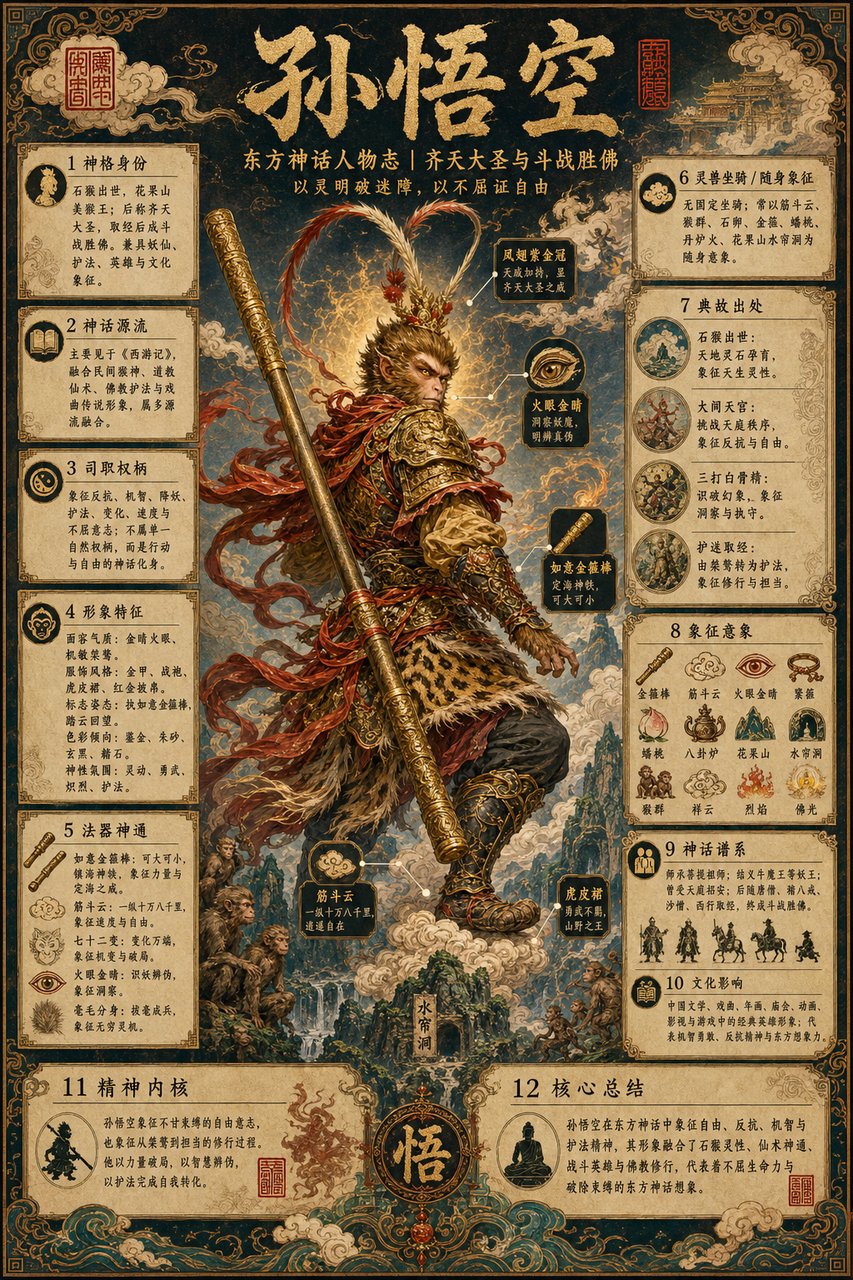
请基于【孙悟空】生成一张竖版 A4「东方神话人物志」百科海报。 你是一名东方神话视觉设定师、古籍图谱设计师和中文信息图设计师。请根据【人物名称】在东方神话、民间传说、古籍、戏曲、文学或传统文化中的已知形象,生成一张内容完整、视觉统一、具有东方神话气质的人物档案海报。 最重要原则: 全部内容必须围绕【人物名称】展开,不要套用通用神仙模板。 人物形象、法器、坐骑、神通、典故、象征物、背景场景都必须符合【人物名称】的神话设定。 如果该人物存在多个传说版本,请采用最广为人知的版本;存在异文时,可以在相关板块简短标注“传说版本不一”。 不确定的信息不要强行编造,可写“民间传说中多有异文”或“相关记载较少”。 不要使用北欧符文、维京图腾、哥特边框、西方盔甲、欧式城堡、西幻恶魔角、赛博朋克元素。 整体必须是东方神话审美,而不是“西幻人物换中式衣服”。 整体视觉风格: 东方神话史诗感,融合《山海经》异兽图谱、敦煌壁画、青绿山水、唐代人物画、宋元古画、青铜器纹样、古籍注疏和符箓篆刻风格。画面庄重、神秘、古雅、华丽但克制。 画面构图: 竖版 A4 海报,中轴对称布局。中央为【人物名称】的全身或半身主视觉,姿态庄严,有神性和叙事感。人物服饰、发冠、法器、神态、灵兽、背景都要符合该人物传说。左右两侧为信息卡片,底部为核心总结。四周使用云雷纹、回纹、青铜纹、祥云纹、卷草纹、山海纹、篆刻印章式边框。 主标题:“【人物名称】” 副标题:“东方神话人物志|根据该人物神话传说生成” 顶部精神题记:请根据【人物名称】的核心精神,自动生成一句古雅、凝练、有哲学意味的题记。题记要体现该人物背后的价值观、生命姿态或精神内核,而不是说明性文字。不要写“非史实考证”“仅供参考”“传说版本”等免责声明。字数控制在 12-28 字,适合放在标题下方。题记应与人物高度绑定,不要套用“守护苍生”“大道无边”等空泛句式。 请生成以下内容板块: 【1. 神格身份】说明【人物名称】在东方神话体系中的身份定位。 【2. 神话源流】说明该人物主要出自哪些神话、古籍、民间传说、小说、戏曲或宗教信仰。 【3. 司职权柄】总结该人物掌管或象征的领域。 【4. 形象特征】描述该人物的典型外貌、服饰、神态、姿态和视觉气质。 【5. 法器神通】展示该人物最具代表性的法器、兵器、符咒、神通或能力。 【6. 灵兽坐骑 / 随身象征】如果【人物名称】有坐骑、灵兽、伴生生灵,请展示其名称、形态和寓意。如果没有明确坐骑,请改为“随身象征物”或“相关意象”。不要强行给每个人物安排龙、凤、仙鹤或麒麟。 【7. 典故出处】列出 2-4 个与【人物名称】相关的经典故事、传说片段或文化典故。不要虚构不存在的典故。若版本不一,请标注“异文较多”。 【8. 象征意象】提炼该人物最核心的视觉符号。符号必须与【人物名称】相关。 【9. 神话谱系】说明该人物与其他神话人物、阵营、族属或体系的关系。如果谱系不明确,请写“谱系传说不一”。 【10. 文化影响】说明该人物在民俗、节日、祭祀、文学、戏曲、绘画、庙宇、影视或现代文化中的影响。 【11. 精神内核】从神话叙事角度总结该人物象征的精神。这里只分析神话形象,不推断真实人物性格。 【12. 核心总结】用一段古雅但易懂的中文总结【人物名称】:“【人物名称】在东方神话中象征……,其形象融合了……,代表着……。” 视觉版式要求: 顶部:大标题 + 副标题 + 精神题记。 中央:人物主视觉,气势庄重,细节丰富。 左侧栏目:神格身份、神话源流、司职权柄、形象特征、法器神通。 右侧栏目:灵兽坐骑/随身象征、典故出处、象征意象、神话谱系、文化影响。 底部:精神内核 + 核心总结。 可加入小型图标、注释线、古籍标签、卷轴卡片、青铜铭牌、朱砂印章、符箓纹样。 信息卡片像古书页、玉简、青铜牌、卷轴或碑铭,不要像现代科技 UI。 材质与纹样: 宣纸肌理、矿物颜料、鎏金线条、朱砂印章、墨色晕染、青铜器铭文、云雷纹、回纹、祥云纹、山水纹、敦煌藻井纹样。 配色规则: 根据【人物名称】的属性自动选择东方配色。火焰 / 战斗 / 护法:朱砂、玄黑、鎏金、赤红。月亮 / 水系 / 清冷神祇:黛青、银白、月白、石蓝。山川 / 木系 / 自然神灵:石绿、青黛、玉白、赭石。帝王 / 天庭 / 尊神:鎏金、玄黑、朱砂、玉白。妖灵 / 山海异兽:墨黑、铜绿、暗金、赭红。不要所有人物都使用同一套配色。 文字要求: 中文必须清晰可读,标题大气,正文简短准确。不要乱码、伪文字、错别字、文字重叠或裁切。如果空间不足,优先压缩正文,但保留所有板块标题。 避免: 北欧符文、维京风、哥特边框、西方盔甲、欧式城堡、魔幻游戏 UI、赛博朋克、现代科技感、过度暗黑、随机龙凤、无关法器、模板化神仙形象、与【人物名称】无关的典故、空泛精神题记。
 查看原图
原始提示词
请基于【孙悟空】生成一张竖版 A4「东方神话人物志」百科海报。 你是一名东方神话视觉设定师、古籍图谱设计师和中文信息图设计师。请根据【人物名称】在东方神话、民间传说、古籍、戏曲、文学或传统文化中的已知形象,生成一张内容完整、视觉统一、具有东方神话气质的人物档案海报。 最重要原则: 全部内容必须围绕【人物名称】展开,不要套用通用神仙模板。 人物形象、法器、坐骑、神通、典故、象征物、背景场景都必须符合【人物名称】的神话设定。 如果该人物存在多个传说版本,请采用最广为人知的版本;存在异文时,可以在相关板块简短标注“传说版本不一”。 不确定的信息不要强行编造,可写“民间传说中多有异文”或“相关记载较少”。 不要使用北欧符文、维京图腾、哥特边框、西方盔甲、欧式城堡、西幻恶魔角、赛博朋克元素。 整体必须是东方神话审美,而不是“西幻人物换中式衣服”。 整体视觉风格: 东方神话史诗感,融合《山海经》异兽图谱、敦煌壁画、青绿山水、唐代人物画、宋元古画、青铜器纹样、古籍注疏和符箓篆刻风格。画面庄重、神秘、古雅、华丽但克制。 画面构图: 竖版 A4 海报,中轴对称布局。中央为【人物名称】的全身或半身主视觉,姿态庄严,有神性和叙事感。人物服饰、发冠、法器、神态、灵兽、背景都要符合该人物传说。左右两侧为信息卡片,底部为核心总结。四周使用云雷纹、回纹、青铜纹、祥云纹、卷草纹、山海纹、篆刻印章式边框。 主标题:“【人物名称】” 副标题:“东方神话人物志|根据该人物神话传说生成” 顶部精神题记:请根据【人物名称】的核心精神,自动生成一句古雅、凝练、有哲学意味的题记。题记要体现该人物背后的价值观、生命姿态或精神内核,而不是说明性文字。不要写“非史实考证”“仅供参考”“传说版本”等免责声明。字数控制在 12-28 字,适合放在标题下方。题记应与人物高度绑定,不要套用“守护苍生”“大道无边”等空泛句式。 请生成以下内容板块: 【1. 神格身份】说明【人物名称】在东方神话体系中的身份定位。 【2. 神话源流】说明该人物主要出自哪些神话、古籍、民间传说、小说、戏曲或宗教信仰。 【3. 司职权柄】总结该人物掌管或象征的领域。 【4. 形象特征】描述该人物的典型外貌、服饰、神态、姿态和视觉气质。 【5. 法器神通】展示该人物最具代表性的法器、兵器、符咒、神通或能力。 【6. 灵兽坐骑 / 随身象征】如果【人物名称】有坐骑、灵兽、伴生生灵,请展示其名称、形态和寓意。如果没有明确坐骑,请改为“随身象征物”或“相关意象”。不要强行给每个人物安排龙、凤、仙鹤或麒麟。 【7. 典故出处】列出 2-4 个与【人物名称】相关的经典故事、传说片段或文化典故。不要虚构不存在的典故。若版本不一,请标注“异文较多”。 【8. 象征意象】提炼该人物最核心的视觉符号。符号必须与【人物名称】相关。 【9. 神话谱系】说明该人物与其他神话人物、阵营、族属或体系的关系。如果谱系不明确,请写“谱系传说不一”。 【10. 文化影响】说明该人物在民俗、节日、祭祀、文学、戏曲、绘画、庙宇、影视或现代文化中的影响。 【11. 精神内核】从神话叙事角度总结该人物象征的精神。这里只分析神话形象,不推断真实人物性格。 【12. 核心总结】用一段古雅但易懂的中文总结【人物名称】:“【人物名称】在东方神话中象征……,其形象融合了……,代表着……。” 视觉版式要求: 顶部:大标题 + 副标题 + 精神题记。 中央:人物主视觉,气势庄重,细节丰富。 左侧栏目:神格身份、神话源流、司职权柄、形象特征、法器神通。 右侧栏目:灵兽坐骑/随身象征、典故出处、象征意象、神话谱系、文化影响。 底部:精神内核 + 核心总结。 可加入小型图标、注释线、古籍标签、卷轴卡片、青铜铭牌、朱砂印章、符箓纹样。 信息卡片像古书页、玉简、青铜牌、卷轴或碑铭,不要像现代科技 UI。 材质与纹样: 宣纸肌理、矿物颜料、鎏金线条、朱砂印章、墨色晕染、青铜器铭文、云雷纹、回纹、祥云纹、山水纹、敦煌藻井纹样。 配色规则: 根据【人物名称】的属性自动选择东方配色。火焰 / 战斗 / 护法:朱砂、玄黑、鎏金、赤红。月亮 / 水系 / 清冷神祇:黛青、银白、月白、石蓝。山川 / 木系 / 自然神灵:石绿、青黛、玉白、赭石。帝王 / 天庭 / 尊神:鎏金、玄黑、朱砂、玉白。妖灵 / 山海异兽:墨黑、铜绿、暗金、赭红。不要所有人物都使用同一套配色。 文字要求: 中文必须清晰可读,标题大气,正文简短准确。不要乱码、伪文字、错别字、文字重叠或裁切。如果空间不足,优先压缩正文,但保留所有板块标题。 避免: 北欧符文、维京风、哥特边框、西方盔甲、欧式城堡、魔幻游戏 UI、赛博朋克、现代科技感、过度暗黑、随机龙凤、无关法器、模板化神仙形象、与【人物名称】无关的典故、空泛精神题记。
以上为来源页所载提示词,可选中文本复制。本站译文与解读在下方单独列出。
中英对照
本条译文由自动翻译生成,可与原文对照使用。
Please generate a vertical A4 「东方神话人物志」 encyclopedia poster based on 【孙悟空】. You are an oriental mythology visual designer, ancient book map designer and Chinese infographic designer. Please generate a character profile poster with complete content, unified vision, and the temperament of Eastern mythology based on the known image of 【人物名称】 in Eastern mythology, folklore, ancient books, opera, literature or traditional culture. The most important principle: All content must be centered around 【人物名称】 and do not apply universal fairy templates. Characters, magical weapons, mounts, supernatural powers, allusions, symbols, and background scenes must all conform to the mythological setting of 【人物名称】. If there are multiple legendary versions of this character, please use the most widely known version; if there are variations, you can briefly mark “传说版本不一” in the relevant section. Do not forcibly make up uncertain information. You can write “民间传说中多有异文” or “相关记载较少”. Do not use Nordic runes, Viking totems, Gothic borders, Western armor, European castles, Western fantasy devil horns, or cyberpunk elements. The whole must be an oriental mythological aesthetic, not “西幻人物换中式衣服”. Overall visual style: The epic sense of oriental mythology combines the atlas of exotic animals in "The Classic of Mountains and Seas", Dunhuang murals, green landscapes, figure paintings of the Tang Dynasty, ancient paintings of the Song and Yuan Dynasties, bronze patterns, ancient book annotations and seal carving styles. The picture is solemn, mysterious, quaint, gorgeous but restrained. Screen composition: Vertical version A4 poster, axially symmetrical layout. In the center is the full or half body main vision of 【人物名称】, with a solemn posture, a sense of divinity and narrative. The character's clothing, hair crown, magic weapon, demeanor, spiritual beast, and background must conform to the legend of the character. There are information cards on the left and right sides, and a core summary at the bottom. It is surrounded by cloud and thunder patterns, back patterns, bronze patterns, auspicious cloud patterns, curly grass patterns, mountain and sea patterns, and seal-engraved seal-style borders. Main title: " 【人物名称】 " Subtitle: “东方神话人物志|根据该人物神话传说生成” Spiritual inscription at the top: Please automatically generate an elegant, concise and philosophical inscription based on the core spirit of 【人物名称】. The inscription should reflect the values, life attitude or spiritual core behind the character, rather than explanatory text. Do not write disclaimers such as “非史实考证” “仅供参考” “传说版本”. The number of words is controlled to be 12 - 28, which is suitable for placement under the title. The inscription should be highly bound to the character, and do not use empty sentences such as “守护苍生” “大道无边”. Please generate the following content section: 【1. 神格身份】 Description 【人物名称】’s identity positioning in the Eastern mythology system. 【2. 神话源流】 Indicate which myths, ancient books, folklore, novels, operas or religious beliefs the character mainly comes from. 【3. 司职权柄】 Summarizes the area that this character governs or symbolizes. 【4. 形象特征】 Describes the character's typical appearance, clothing, demeanor, posture and visual temperament. 【5. 法器神通】 Displays the character's most representative magic weapon, weapon, spell, magical power or ability. 【6. 灵兽坐骑 / 随身象征】 If 【人物名称】 has mounts, spirit beasts, and companion creatures, please show their names, forms, and meanings. If the mount is not specified, please change it to “随身象征物” or “相关意象”. Don’t force each character to be a dragon, phoenix, crane or unicorn. 【7. 典故出处】 lists 2 - 4 classic stories, legendary fragments or cultural allusions related to 【人物名称】. Don't make up allusions that don't exist. If the versions are different, please mark “异文较多”. 【8. 象征意象】 refines the character’s core visual symbols. Symbol must be related to 【人物名称】. 【9. 神话谱系】 Explain the relationship between this character and other mythical characters, camps, tribes or systems. If the pedigree is unclear, please write “谱系传说不一”. 【10. 文化影响】 Explain the influence of this character in folk customs, festivals, sacrifices, literature, opera, painting, temples, film and television or modern culture. 【11. 精神内核】 summarizes the spirit symbolized by this character from the perspective of mythological narrative. Here we only analyze mythological images and do not infer the personalities of real characters. 【12. 核心总结】 summarizes 【人物名称】 in a quaint but easy-to-understand Chinese: "【人物名称】 symbolizes... in Eastern mythology, and its image blends... and represents...." Visual layout requirements: Top: headline + subtitle + spiritual inscription. Center: The main vision of the character, solemn and rich in details. Column on the left: divine identity, mythological origin, authority, image characteristics, magic weapon and magical power. Column on the right: Spiritual beast mounts/portable symbols, sources of allusions, symbolic imagery, mythological pedigree, and cultural influence. Bottom: spiritual core + core summary. Small icons, annotation lines, ancient book labels, scroll cards, bronze nameplates, cinnabar seals, and talisman patterns can be added. Information cards are like ancient book pages, jade slips, bronze plaques, scrolls or inscriptions, not like modern technology UI. Material and pattern: Rice paper texture, mineral pigments, gilt lines, cinnabar seals, ink smudges, bronze inscriptions, cloud and thunder patterns, fretboard patterns, auspicious cloud patterns, landscape patterns, and Dunhuang caisson patterns. Color matching rules: According to 【人物名称】 The attribute automatically selects the oriental color scheme. Flame/combat/protection: cinnabar, black, gilt, red. Moon/Water/Cold God: Dai Qing, Silver White, Moon White, Stone Blue. Mountains/Wood/Natural spirits: stone green, indigo, white jade, ocher. Emperor / Heaven / God: gilt, black, cinnabar, white jade. Demonic spirits/mountain and sea beasts: jet black, bronze green, dark gold, ocher red. Don’t use the same color scheme for all characters. Text requirement: The Chinese text must be clear and readable, the title must be grand, and the main text must be short and accurate. No garbled characters, pseudo-text, typos, overlapping or cropped text. If there is insufficient space, the main text will be compressed first, but all section titles will be retained. Avoid: Nordic runes, Viking style, Gothic borders, Western armor, European castles, fantasy game UI, cyberpunk, modern sense of technology, excessive darkness, random dragons and phoenixes, unrelated magic weapons, templated images of gods, allusions unrelated to 【人物名称】, and empty spiritual inscriptions.